



11 Mar Types of Business Licence in Malaysia: A Guide for Foreign Investors (2026)

If you are a foreign investor considering Malaysia as your next business destination, you are making a smart move.
Malaysia consistently ranks as one of Southeast Asia’s most attractive markets for foreign direct investment, thanks to its strategic location, competitive tax rates, and government incentives that actively welcome foreign-owned enterprises.
But here is the part that catches many investors off guard: once you have registered your company, you are not automatically cleared to start operating.
You still need the right business licences and depending on your industry, that could mean dealing with multiple government agencies at the federal, state, and local level.
Understanding the types of business licences in Malaysia is essential before you commit time and capital to your market entry.
Get this wrong, and you could face fines, delays in deploying your staff, or even be forced to shut down operations.
In this guide, we will walk you through everything you need to know. The main licence categories, what each one covers, the specific considerations that apply to foreign investors, the step-by-step application process, realistic timelines, and the common mistakes you should avoid.

Why Do You Need a Business Licence in Malaysia?
Let us start with the basics. Every business operating in Malaysia, whether local or foreign-owned is legally required to hold the appropriate licences.
This is not optional. Operating without valid licences can result in fines ranging from RM2,000 to RM50,000, imprisonment of up to one year, or even forced closure of your business.
One important distinction you should understand early on: company registration and business licensing are two separate things.
Registering your company with the Companies Commission of Malaysia (SSM) gives your entity legal existence. But registration alone does not give you permission to operate. For that, you need business licences that issued by the relevant local, state, or federal authorities depending on your industry and location.
If you are a foreign investor, there is an additional layer to consider. Your licensing status is directly tied to your ability to bring in expatriate staff.
The Expatriate Services Division (ESD) will not process Employment Pass (EP), Professional Visit Pass (PVP), or Dependent Pass applications unless your company holds the correct licences.
In other words, if your licensing is delayed, your work permits are delayed too, and that affects your entire operational timeline.
Think of it as a chain: you register your company first, then secure your licences, and only then can you apply for work permits. Each step depends on the one before it, which is why getting professional guidance early in the process makes a real difference.

The Three Main Categories of Business Licences in Malaysia
Now that you understand why licensing matters, let us look at what types of licences exist.
Malaysia’s business licensing framework is structured into three main categories. The type of business licence in Malaysia that your company needs will depend on your industry, your business activities, and the scope of your operations.
Before we go into the details of each category, here is a quick overview to help you see the full picture:
| Category | What It Covers | Who Issues It | Typical Timeline |
| General Licences | Required for all businesses, regardless of sector | SSM, Local Councils, LHDN | 1-4 weeks |
| Industry-Specific Licences | Required for businesses in regulated sectors | MIDA, KPDNKK, Bank Negara, MOE, MOTAC | 1-6 months |
| Activity-Specific Licences | Required for specific operations across any sector | Various federal bodies | Varies |
Let us break each one down so you know exactly what applies to your situation.
1. General Licences: What Every Business in Malaysia Needs
Regardless of what industry you are in, these are the foundational licences that every business in Malaysia must obtain. Think of them as your baseline compliance requirements.
a) SSM Company Registration (Certificate of Incorporation):
 Source
This is your starting point. You register your company through SSM’s MyCoID portal, and upon approval, you receive a Certificate of Incorporation.
If you are a foreign investor, the most common and recommended structure is a Sdn. Bhd. (Private Limited Company), which allows you to own 100% of the company in most sectors.
You will need at least one Malaysian-resident director to meet the legal requirement.
b) Business Premise Licence (Lesen Premis):

If your business operates from a physical location, you need a premise licence from the local municipal council that governs your area.
For example, if your office is in Kuala Lumpur, you apply through DBKL. If it is in Subang Jaya, you go through MBSJ. One thing to watch out for, the relevant council is determined by your premise address, not your company’s registered address.
These can be different, and applying to the wrong council means starting the process over.
c) Signboard Licence (Lesen Iklan Papan Tanda):
 Source
If you plan to display any outdoor signage for your business, you will need a signboard licence from the same local council.
This is usually applied for at the same time as your premise licence. You will need to submit your signboard design, including the colour, dimensions, and proposed placement location.
d) Employer Tax File (E-Number):
As soon as you start hiring employees, you must register an employer tax file (E-Number) with the Inland Revenue Board (LHDN). This is a mandatory step for corporate and employer tax compliance in Malaysia.
e) EPF and SOCSO Registration:
These are mandatory employer contribution schemes for all businesses with employees in Malaysia. You need to register with both the Employees Provident Fund (EPF) and the Social Security Organisation (SOCSO) before you can run your first payroll.
f) HRDF Registration:
Employers in designated industries are required to register with the Human Resources Development Fund and contribute to workforce training. Failing to register can lead to penalties of up to RM10,000 or imprisonment of up to one year.
At this point, you might be thinking, that is already a lot of licences just for the basics. And you are right. But here is the important thing to remember: general licences alone are not enough if your business falls into a regulated sector. You will also need the industry-specific licences we are about to cover.
Latest Posts



Unsure Which Business Licences You Need in Malaysia?
Get expert guidance on your exact licensing requirements. Our team will assess your business activities and provide a clear compliance roadmap at no cost.

2. Industry-Specific Licences: What You Need Based on Your Sector
If your business operates in a regulated industry, you will need additional licences on top of the general ones.
These permits ensure that your company meets the safety standards, compliance requirements, and governance frameworks specific to your sector.
Here are the most common industry-specific licences you should be aware of:
a) Manufacturing Licence (MIDA):
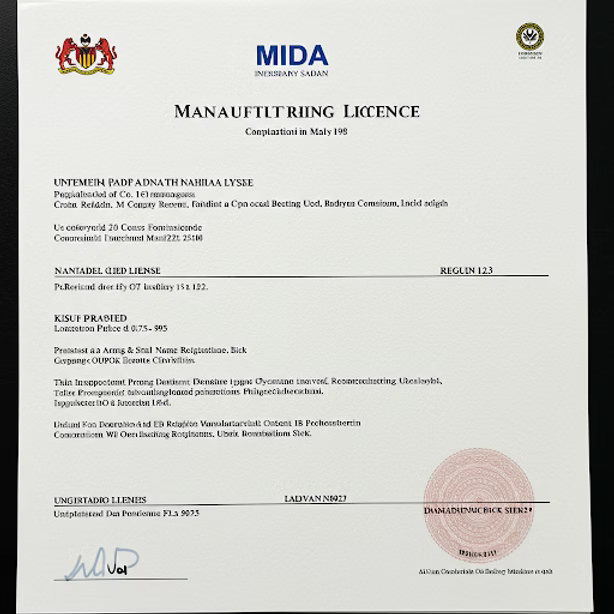
If your company has shareholders’ funds of RM2.5 million or more, or employs 75 or more full-time workers, you are required to obtain a manufacturing licence from the Malaysian Investment Development Authority (MIDA).
You will need to submit Form ICA 10 along with your company’s Memorandum and Articles of Association.
b) Wholesale Retail Trade (WRT) Licence:
This is one of the licences that catches foreign investors by surprise. If your company has any foreign shareholding and is engaged in wholesale, retail, trading, import/export, or food and beverage operations, you are required to obtain a WRT licence from the Ministry of Domestic Trade (KPDNKK).
This applies regardless of the percentage of foreign ownership. You will need to prepare a comprehensive business plan as part of your application, and processing typically takes one to three months.
c) Construction Licence (CIDB):

All contractors, whether local or foreign, must register with the Construction Industry Development Board (CIDB) under Section 25 of Act 520.
There are multiple registration grades and categories to consider, including Civil Engineering (CE), Building Construction (B), and Mechanical and Electrical (ME). If your business involves any form of construction activity, this registration is mandatory.
d) Financial Services Licence (Bank Negara Malaysia):
If you plan to operate in banking, money broking, insurance, fintech, or any other financial services sector, you will need licensing from Bank Negara Malaysia.
Be aware that this sector carries some of the most stringent foreign ownership limitations and capital requirements.
e) Healthcare Licence:
Running a clinic, hospital, or any healthcare service?
You will need licences regulated by the Malaysian Medical Council and the Ministry of Health. The good news for foreign investors is that Malaysia allows 100% foreign equity participation in private hospital services.
f) Food and Beverage Licences:
The F&B sector requires several separate licences. These include a Food Handling certification from the Ministry of Health (all food handlers must complete a certified course), Halal certification from JAKIM if you plan to market to Muslim consumers, and a Liquor Licence if you intend to serve alcohol.
Each of these has its own application process and timeline.
g) Education Licence (MOE):
If you are setting up a private education institution, international school, or vocational training centre, you will need licensing from the Ministry of Education.
h) Tourism Licence (MOTAC):
Travel agencies, tour operators, and hotel businesses require a licence from the Ministry of Tourism, Arts and Culture Malaysia.
i) Malaysia Digital (MD) Status:
If you are a technology company looking to tap into digital economy incentives, tax exemptions, and government support programmes, you should consider applying for Malaysia Digital status through MDEC (Malaysian Digital Economy Corporation).

3. Activity-Specific Licences (Permits Based on What You Do)
The third category consists of licences that govern certain activities your business may undertake, regardless of your industry. Even if your core business is technology consulting, for instance, you may still need one of these permits based on your daily operations.
Common activity-specific licences include an Import/Export Permit if your business involves cross-border trade, an Environmental Licence for operations that involve waste management or air-purifying equipment, and a Fire Safety Certificate, which is actually required for many premise licence applications.
You may also need a Music and Public Performance Licence (MACP) if you play copyrighted music in your business premises, an MOF Vendor Registration if you want to supply goods or services to Malaysian government agencies, or a Manpower Supply Licence if your business provides local or foreign staffing services.
The key takeaway here is this: do not assume that the first two categories cover everything. Review your actual business activities carefully or better yet, let an experienced advisor do it for you.
Licensing Considerations You Should Know as a Foreign Investor
Everything we have covered so far applies to all businesses in Malaysia.
But if you are a foreign investor or part of a multinational corporation, there are additional rules and requirements that apply specifically to you. This is the section most licensing guides overlook and the one that matters most for your planning.

a) Foreign Ownership Framework:
The good news is that Malaysia allows 100% foreign ownership through a Sdn. Bhd. structure in most industries. This makes it one of the most accessible markets in Southeast Asia for international investors.
However, certain regulated sectors, including banking, telecommunications, oil and gas, and agriculture do impose foreign equity limitations or require you to have a local equity partner. Before you commit to an industry, make sure you understand the ownership rules that apply.
b) Bumiputera Equity Requirements:
In specific sectors such as construction, government contracting, and automotive, there may be requirements for partial Bumiputera ownership.
These requirements exist to promote local economic participation and can vary depending on the industry and the nature of your engagement with government bodies.
c) The WRT Licence (Do Not Overlook This):
If your company has any foreign shareholding and is involved in wholesale, retail, trading, import/export, or F&B, you need a WRT licence. Full stop.
This is one of the most commonly missed requirements among first-time foreign investors, and not having it can delay your entire setup.
d) Paid-Up Capital (The Practical Reality):
Here is something that surprises many first-time investors. The legal minimum paid-up capital for a Sdn. Bhd. is just RM1, but that number has very little to do with what you will actually need.
If you plan to bring in expatriate staff, the Expatriate Services Division (ESD) typically requires a minimum of RM250,000 in paid-up capital before it will even look at your Employment Pass application.
Some licences carry their own capital requirements on top of that. Our advice? Do not treat paid-up capital as an afterthought. Undercapitalising your company is one of the quickest ways to stall your entire licensing and immigration timeline.
e) The Licensing-Immigration Connection (This Is Critical):
Here is the insight that most guides miss entirely. The ESD will not process your Employment Pass, Professional Visit Pass, or Dependent Pass applications unless your company already holds the appropriate business licences.
What does that mean for you? If your licensing is delayed by even a few weeks, your work permits for foreign staff are delayed by the same amount and that pushes back your ability to deploy expatriate staff and start operations.
This is exactly why we recommend managing your licensing and immigration applications as parallel work streams rather than sequential steps.
In our experience at Moore Bzi, this approach typically reduces the total corporate setup timeline by four to eight weeks. You can learn more about the different types of work permit available in Malaysia and what each one requires.
f) Foreign Investment Committee (FIC) Considerations:
If your company has more than 30% foreign ownership and you are acquiring assets exceeding RM10 million, you may need approval from the Foreign Investment Committee. This typically applies to larger transactions and mergers rather than routine licensing.
Foreign investors should also be aware of the corporate tax implications that apply to their Malaysian entity.
How to Apply for a Business Licence in Malaysia: A Step-by-Step Process
Now that you understand the different licence types, let us look at how the application process actually works.
While the specifics vary depending on the licence type and issuing authority, the following six-step framework will give you a clear roadmap.
Step 1 : Register Your Company with SSM
Everything starts here. You incorporate your company through SSM’s MyCoID portal, appoint at least one Malaysian-resident director, and engage a licensed company secretary within 30 days.
For most foreign investors, the Sdn. Bhd. structure is the way to go
Step 2 : Identify the Licences You Need
Based on your business structure, industry, premise location, and planned activities, determine which licences are required.
The MalaysiaBiz portal can help as a starting reference, but if you are a foreign-owned entity, we strongly recommend working with a professional advisor. The additional complexity of equity rules, WRT requirements, and immigration interdependencies makes self-navigation risky.
Step 3 : Prepare Your Documentation
Gather the required documents for each licence application.
Common requirements include your SSM registration certificate, directors’ identification (IC or passport copies), a tenancy or sale and purchase agreement for your business premise, photographs of the premises, your proposed signboard design, a Fire Department support letter, and a detailed business plan for licences such as the WRT licence or manufacturing licence.
Step 4 : Submit Your Applications to the Right Authorities
This is where it gets a little complex, because different licences go to different bodies. Your business premise and signboard licences go to your local municipal council.
Manufacturing licences go to MIDA. WRT applications go to KPDNKK. Each sector-specific licence has its own designated authority.
Step 5 : Prepare for Regulatory Inspections
For many licence types, the issuing authority will conduct an on-site inspection of your premises before granting approval.
This is especially common for manufacturing, F&B, retail, and hospitality businesses. Ensure your premises are ready for inspection before submitting your application, as it can save you time.
Step 6 : Receive Your Licence and Stay Compliant
Once approved, your licence will typically be valid for one to two years. But here is what many business owners forget: you must renew your licences before they expire.
Operating with a lapsed licence carries the same penalties as operating without one. Set up a compliance calendar from day one so you never miss a renewal date.

Streamline Your Business Licensing & Immigration Process
With over 20 years of experience supporting foreign investors and MNCs in Malaysia, we manage your business licences and immigration approvals concurrently, ensuring nothing delays your market entry.
How Long Does It Take? Processing Timelines by Licence Type
This is one of the first questions every investor asks, and understandably so. Your licensing timeline directly affects when you can start operating, when you can bring in staff, and when you start generating revenue.
The table below gives you a realistic picture of what to expect. Keep in mind that these are estimated timelines based on standard processing.
Your actual experience may vary depending on the completeness of your application and the current workload at the relevant authority.
| Licence Type | Issuing Authority | Est. Timeline | Key Requirement |
| SSM Registration | SSM (MyCoID) | 3-7 working days | Company constitution, director details |
| Business Premise Licence | Local Council (e.g., DBKL) | 2-4 weeks | Tenancy agreement, premise photos |
| Signboard Licence | Local Council | 2-4 weeks | Signboard design specifications |
| WRT Licence | KPDNKK | 1-3 months | Business plan, foreign ownership documents |
| Manufacturing Licence | MIDA | 2-4 months | Form ICA 10, M&A documentation |
| CIDB Licence | CIDB | 1-3 months | PPK certificate, grade classification |
| Halal Certification | JAKIM | 6-24 months | Premises audit, compliance inspection |
| Financial Services Licence | Bank Negara | 3-6 months | Capital and compliance review |
Common Mistakes Foreign Investors Should Avoid
After working with foreign investors for over two decades, we have seen certain mistakes come up again and again. Here six mistakes are the ones you should be particularly careful to avoid.
1. Assuming registration means you are licensed
This is the most basic, but surprisingly common error. SSM registration gives your company legal existence.
It does not mean you are authorised to operate. You still need your premise licence, signboard licence, and any industry-specific permits.
2. Overlooking the WRT licence
If your company has foreign shareholding and is involved in any form of wholesale, retail, trading, or F&B, you need a WRT licence.
This requirement is absolute, and not having it can delay your entire setup, including your work permit applications.
3. Underestimating your paid-up capital needs
The legal minimum is RM1, but the practical reality for foreign investors is RM250,000 or more, especially if you plan to apply for Employment Passes.
Applying for licences or work permits before meeting these thresholds results in rejected applications and lost time.
4. Submitting to the wrong local council
Your local council is determined by where your premise is located, not where your company is registered. Apply to the wrong one, and you start the process from scratch.
5. Letting licences expire
An expired licence carries the same legal consequences as no licence at all. Fines, potential imprisonment, and forced closure all apply. Keep a compliance calendar and renew well in advance.
6. Treating licensing and immigration as separate projects
This is the most costly mistake in terms of your timeline.
When you handle licensing first and only then start your work permit applications, you are adding unnecessary months to your setup. These processes can and should run in parallel.
Why Choose Moore Bzi?
Unlike generic licensing agencies that only handle paperwork, or large firms where your application is just another file in the queue, Moore Bzi delivers integrated corporate advisory services with a boutique touch.
We are experienced enough to navigate Malaysia’s complex multi-agency licensing landscape, but personal enough to understand your specific business needs.
Our core strengths include:
- 20+ Years of Licensing & Immigration Expertise: With over two decades of hands-on experience, we help foreign investors and MNCs obtain the right business licences in Malaysia, including premise licences, CIDB registration, WRT licensing, and sector-specific permits.
- Comprehensive One-Stop Solutions: End-to-end services covering company registration, business licensing, Employment Pass processing, payroll outsourcing, and company secretarial support all under one roof, so nothing falls through the cracks.
- Licensing + Immigration in Parallel: Most providers handle licensing and work permits separately, causing unnecessary delays. We manage both concurrently through our direct collaboration with the Expatriate Services Division (ESD), typically saving our clients four to eight weeks in total setup time.
- ISO 9001:2015 Certified Quality: Our services strictly adhere to international standards focused on reliability, precision, and client satisfaction across all permit and licence application processes.
- Strong Government Network: We work directly with key Malaysian authorities, including SSM, MIDA, KPDNKK, the Immigration Department, and ESD, ensuring faster and fully compliant processing of your applications.
- Personalised, Client-Centric Support: We do not just submit forms; we provide hands-on, human-led guidance on paid-up capital planning, foreign equity structuring, identifying the correct licensing authorities for your premise location, and coordinating your full operational setup in Malaysia.
Conclusion
Setting up a business in Malaysia is an exciting opportunity, but getting your licensing right from the start is what separates a smooth market entry from a frustrating one.
As we have covered, Malaysia’s licensing framework is divided into three main categories: General, Industry-Specific, and Activity-Specific.
Each is regulated by different authorities, and as a foreign investor, you face additional requirements around WRT licensing, paid-up capital, equity conditions, and the critical connection between your licences and your ability to sponsor work permits.
The good news? You do not have to navigate this alone. Moore Bzi has spent over 20 years helping foreign investors and multinational corporations establish and grow their businesses in Malaysia.
We manage the entire process from company registration and business licensing through to work permit acquisition under a single engagement, so nothing falls through the cracks.
Launch Your Business in Malaysia with Confidence
From identifying required licences to managing the full application process, we handle everything, so you can focus on growing your business.
Frequently Asked Questions
What are the main types of business licences in Malaysia?
There are three main categories: General Licences (required for all businesses), Industry-Specific Licences (for regulated sectors such as manufacturing, financial services, and healthcare), and Activity-Specific Licences (for particular operations that cut across multiple industries, such as import/export or environmental compliance).
Do I need additional licences as a foreign investor?
Yes. On top of the standard licensing requirements, foreign-owned companies may need a Wholesale Retail Trade (WRT) licence, sector-specific permits, and must meet minimum paid-up capital thresholds. Certain regulated sectors also impose foreign equity limitations that affect your licensing options.
What is a WRT licence, and do I need one?
The WRT licence is issued by the Ministry of Domestic Trade (KPDNKK) and is mandatory for all companies with foreign shareholding engaged in wholesale, retail, trading, import/export, or food and beverage activities. If your company has any foreign ownership and operates in these areas, you need this licence.
How long does it take to get a business licence in Malaysia?
It depends on the licence type. SSM company registration takes 3 to 7 working days. Business premise licences take 2 to 4 weeks. Industry-specific licences like the WRT licence take 1 to 3 months. Overall, plan for 3 to 6 months from incorporation to full operational readiness.
What happens if I operate without a valid business licence?
The penalties are serious. You could face fines ranging from RM2,000 to RM50,000, imprisonment of up to one year, confiscation of business assets, and forced closure of your operations.
How does my business licence affect my work permit applications?
Your licensing status directly affects your ability to sponsor expatriate staff. The Expatriate Services Division (ESD) requires your company to hold the correct business licences before it will process Employment Pass, Professional Visit Pass, or Dependent Pass applications.
Can Moore Bzi help me with my business licence application?
Absolutely. Moore Bzi offers end-to-end support for foreign investors, covering company registration, business licensing, WRT licence applications, and work permit processing. With over 20 years of experience, we handle these interconnected processes concurrently, helping you start operations as quickly as possible.